
Experience the mysterious start of the Civil War through a
young boy’s perspective in this historically accurate and action-packed
adventure/mystery
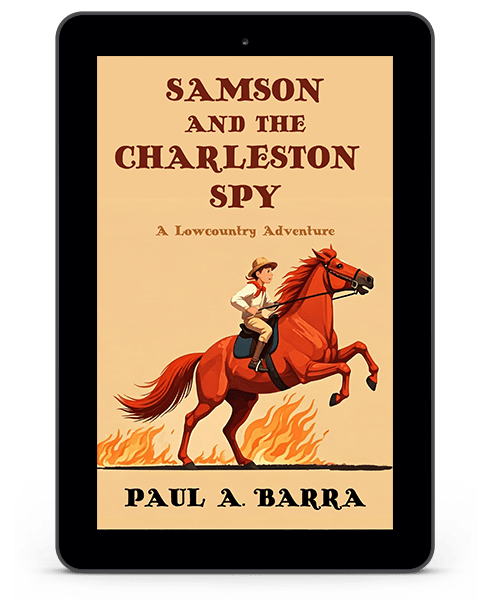
Samson and the
Charleston Spy
A Lowcountry Adventure Book 1
by Paul A Barra
Genre: Middle Grade Historical Adventure Mystery

The protagonist of SAMSON AND THE CHARLESTON SPY may be the
definitive underrepresented voice in middle-grade fiction today: he's a boy and
a Southerner, confronting the Civil War from the Confederate perspective.
When Samson Collier and three sixth-grade friends witness
the bombardment of Ft. Sumter offshore from their homes, they decide that the
Yankee soldiers at the fort must have been forewarned about the attack-since no
one was killed although the structure appeared to be wrecked. They set off to
find the spy who told secrets.
During their escapades, they confront slavery (one of the
four is the son of a freedman), nativism (another of them is the daughter of a
prominent Catholic family), zealotry (a man forming a brigade to fight the
North appropriates Sam's beloved horse) and evil (they are attacked by a
highwayman in The Devil's Hole). Eventually, the children discover a shocking
plan to undermine their homeland.
The book is an historically accurate and action-packed
adventure/mystery.
Amazon * Apple * B&N * Bookshop.org *
Bookbub *
Goodreads

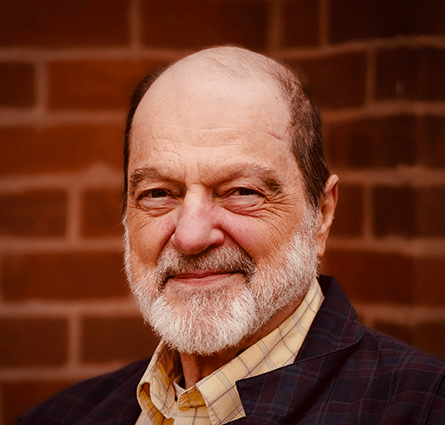
While taking the reader through enticing mysteries, Barra
shares a sense of history and thrill in his works. Using his experiences as a
naval officer, writer, and educator, Barra brings the reader a unique
perspective on fictional mysteries in a very real and different time.
Website
* X
*
Facebook
* Instagram
* Bookbub * Amazon
*
Goodreads
GUEST POST
Why I began writing historical mysteries
by Paul A. Barra
I began writing historical mysteries just before the turn of the century because I wanted to rehabilitate a much-maligned southern bishop. A few days before Christmas I was invited, as the senior staff writer for the Diocese of Charleston, to attend the bishop’s annual party at his Broad Street home. The episcopal residence itself is a wonderful product of the city’s Board of Architectural Review, the agency that oversees the preservation of the peninsula’s history, but inside it, the walls and every horizontal surface are alive with fabulous old works of art.
On the tall and elegant walls hung oil portraits of every bishop of Charleston from John England, who founded the diocese in 1822, to the current one—except for one. The excluded guy was the third bishop, who reigned before, during, and after the War Between the States. Horace Greeley in the NY Herald called him, derisively, The Rebel Bishop, but his real name was Patrick N. Lynch.
Lynch was later an official embarrassment to the diocese, but in his time he was a famous polyglot, speaking many languages, writing essays and homilies that moved people, arguing before courts and congresses, founding a newspaper, opening schools for the children of slaves, and even designing a fresh water system for Charleston, a city that had been beset by salt water intrusion. Lynch also defended the institution of slavery on biblical grounds, and that became his most famous accomplishment. He was known as the South’s most important clerical secessionist. And he was a Catholic. Catholics numbered less than three percent of South Carolina’s population in 1861, when the Civil War lit off, and most of those lived in Charleston. The prelate who hired me, the Most Rev. David Thompson, wanted to bring Lynch out into the light of day. No more hiding The Rebel Bishop.
Bishop Lynch was also a pragmatic political provocateur. He opined that slavery would die out on its own before too long, if Mr. Lincoln would only be patient. Lynch looked at the cotton gin and other technological advances and foresaw that it would soon be too expensive for farmers to own slaves. Winners write history, however, so for all his brilliance, Patrick Lynch was virtually forgotten by all but historians before his century ended. I decided to do my bit to change that.
I went to the diocesan archives in a converted stable behind the episcopal residence to do research. They have most of the third bishop’s letters and other writings, his speeches, even a hand-drawn proclamation signed by CSA President Jefferson Davis naming Lynch as an official designee of the Confederate States of America to negotiate with heads of European nations and the Vatican. The man travelled on the open deck of a blockade runner in 1864 across the wide Atlantic Ocean. The Union Navy, remember, ruled the southern seas at the time. I’d probably win a Pulitzer for writing this action priest’s story.
First, I had to gain access to the Lynch Collection. The diocesan archivist was a Sister of Charity; she wouldn’t let me in. It’s easy to forget in 2025 how authoritative nuns used to be. This one was also a Ph.D. in history from the College of Charleston and she patiently explained that a reporter couldn’t possibly be nuanced enough in his prose to write adequately about “the complicated” Patrick Lynch; it would take an historian—and even one of those would have to be vetted, by her. She obviously had not gotten the memo that the new bishop of Charleston wanted his predecessor’s reputation rehabbed. Bishop Thompson intervened on my behalf, and I was allowed to enter the inner sanctum. But I couldn’t take any materials out. I spent my lunch hour almost every day for a month reading and taking notes. It was fascinating stuff, even the letters to Lynch from his sister, an Ursuline nun whose convent in Columbia was attacked by General Sherman. The profile became the cover story of Catholic Heritage, a magazine of the publishing house called Our Sunday Visitor. The story was so popular, the editor asked me to write a book about Bishop Lynch. I agreed.
I soon discovered that writing a non-fiction book about a historical figure, even a history for non-academics, is not an undertaking for the faint of heart. Those were pre-Internet days and the travel alone to do research was daunting to consider. So, I decided instead to write a mystery novel “Featuring the Real-Life Rebel Bishop.”
I couldn’t very well have a senior man of the cloth running around chasing criminals and interrogating witnesses, so I made the bishop into a version of Nero Wolfe, a la Rex Stout. Instead of tending orchids, The Rebel Bishop managed a diocese and said mass at the Cathedral of St. John the Baptist as his real job and interpreted clues dug up by his own Archie, a young priest assistant from NYC. There were many Southern sympathizers in New York. This young priest was on the fence about the morality of slavery; that gave me ample opportunities for discussion of the issue that is the overarching theme of the novel.
I didn’t know it then, but introducing actual historic figures in a historical mystery is a boon, because readers like to learn while they’re being entertained with fiction. I was able to utilize all the many historical facts about Lynch and the city and the war that I dug up under the watchful gaze of the nun archivist. When the book went out of print last year, I got the rights back and published it as an ebook called FULL OF EYES. It hooked me on historical mysteries, although nowadays I write a version of Americana known as the modern historical mystery, set in the sixties and seventies. My latest is SGT. FORD’S WIDOW, the evolution of a Mekong delta woman as a P.I. in eastern Wyoming of 1969. NPR called it “a compelling, suspenseful and moving novel.”

Follow the tour HERE for special
content
and a $10 giveaway!


The blurb sounds really interesting. Thanks for sharing.
ReplyDeleteThanks for the great blurb and guest post. The book sounds wonderful. Great cover art!
ReplyDelete