“Fetch!
You’re me fetch, me own ghost!” Niall said. “Judas, I hope the
old stories aren’t true, or I’m gonna die, here in this bleedin’
mansion—”
“Sshh!
My parents will hear,” Frederick hissed, and he pushed Niall back
into the kitchen. “Stop being so dramatic! You’re not going to
die, at least not here. Believe me now?”
“I
gotta be headin’ on,” Niall blurted. He snatched the tongs from
the floor and hurried to the back door.
“Wait!”
Frederick called as Niall stepped through the doorway. Niall didn’t
wait. Frederick hopped over the puddle and ran into the alley. Niall
bounded into the wagon seat. “Wait a minute. I’m not a ghost, or
a fitch, or whatever you called me. My name’s Frederick Philips,
and I live here. Ask anyone on this block if it’s true, and they’ll
tell you. Some of them might curse when you mention me, but they’ll
tell you I live here.”
Niall
snapped the reins. The wagon jolted forward.
Frederick
leaped in front of the horse and held up his hands.
“Whoa!”
Niall yelled. The wagon lurched to a stop. “You’re really actin’
the fool, Freddy Boy! Now get outta the lane or I’ll be spittin’
yer name with all yer neighbors!”
“I
need your help, Niall,” Frederick said, and he looked at the back
door.
“Giddap!”
Niall said, and moved to flick the reins again.
“Stop!”
Frederick yelled, and held his hands up like willpower alone would
immobilize the horse.
“How
would you like to earn some money?”
“Have
a job, as you can see,” Niall said, and again lifted the reins.
“You
said it’s temporary,” Frederick said. He looked at the back door
again. “I’ll pay you fifty dollars. That’s twice what you make
in a week, and I only need you for the next day.”
Niall’s
hands stopped, his mouth opened, but, after a moment, he shook his
head.
“Outta
the way, Freddy,” Niall said.
“Wait!
Just wait!” Frederick said. Frederick’s eyes flicked to the
windows on the second and third floors. “Fine, three hundred. I’ll
give you three hundred dollars, but you have to get out of that cart
right now.”
Niall
blinked several times. His lips parted and his jaw sagged. His
expression—one of disbelief and disgust—warred with his body,
which seemed to have its own opinion. He set the reins aside and
stepped down from the wagon.
Frederick
grinned.
“What
do ya need from me, that you’ll pay so much?” Niall asked,
standing next to the horse.
“I
need you to take my place for a bit,” Frederick said.
“Are
ya coddin’ me?” Niall asked. He looked Frederick over like he had
before.
“Don’t
know what that means,” Frederick said, “but I’ll pay you three
hundred dollars to switch clothes with me, sit at that table in there
until my parents come down, and listen to my father’s lecture.
They’ll send you to my room, which is at the very top of the stairs
on the fifth floor at the back of the house—”
Frederick
pointed at the uppermost window, which had a small balcony, then
started unbuttoning his shirt and walked inside.
Niall
followed.
“—Father
will say you can’t have dinner. Mother will feel bad and leave some
outside the bedroom door before they go to their party. My older
sister moved out a month ago, so you’ll have the place to yourself.
You sleep in my bed and stay in my room until tomorrow morning. I’ll
climb the drainpipe before sunrise and we swap back. I’m the
prince, you’re the pauper, see? It’ll be duck soup.”
Website
* Facebook
* Twitter * Instagram
* Bookbub *
Amazon
* Goodreads
GUEST POST
What’s in a Name? Naming Your Novel
Shakespeare
posed this question in Romeo
and Juliet,
and provided a response: “That which we call a rose by any other
name would smell as sweet.”
What
a lie.
Not
even Juliet believed this preposterous assertion. In fact, she spent
the lines just before and after this famous inquiry bemoaning that,
in fact, there’s
quite a bit
in a name. If only Romeo wasn’t a Montague then the lovers’
troubles would be over. But in fact he was a Montegue, and she a
Capulet, and neither could cast off their names lightly.
And,
while we’re at it, a rose by any other name would not
smell as sweet. I acknowledge to Juliet that a person wholly
unacquainted with roses might find their scent pleasing (it’s easy
to be magnanimous to a fictional character, and an author who’s
been dead for hundreds of years), but only if the flower remained
unnamed to them beforehand.
Again,
a rose by any
other name would not smell as sweet. To bolster my point, let’s do
a thought experiment. Let’s pretend I’m a botanist who cultivated
several new varieties of roses. These cultivars smell better and last
longer than other roses, but, being the zany botanist I am, I’ve
allowed my two sons, 12 and 13 years old respectively, to oversee
their branding. Which of these appeals to you most?
Show
your wife you care by sending her a gorgeous bouquet of Fart Flowers!
Nothing says I
Love You
like the scent of a warm summer wind breaking over the garden into
your home. Available at the finest florists.
Spruce
up your yard with Puke Perennials! These two-season shrubs bring
excitement and drama to your garden in heaves of yellow and green.
Available at your local home center.
So,
names matter. Especially if you want to tempt someone to smell the
flowers.
Hence
my anxiety about selecting titles for my novels.
I’ve
had a few people ask if titling a book is like naming a child. In
some ways it is, but in other ways it’s much worse. A child can
grow past their unfortunate name and make it their own, whereas a
book has no means of overcoming an author’s mistakes.
The
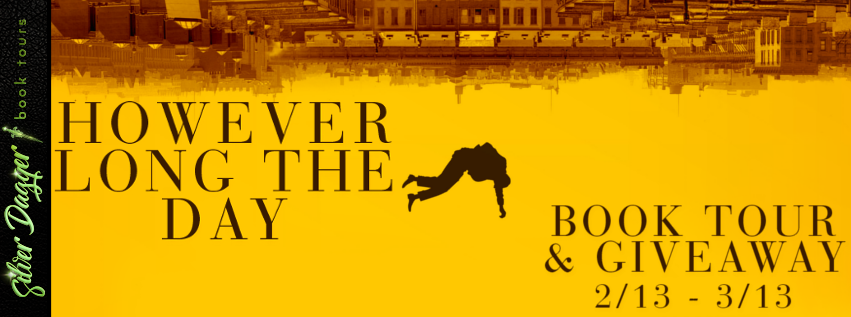
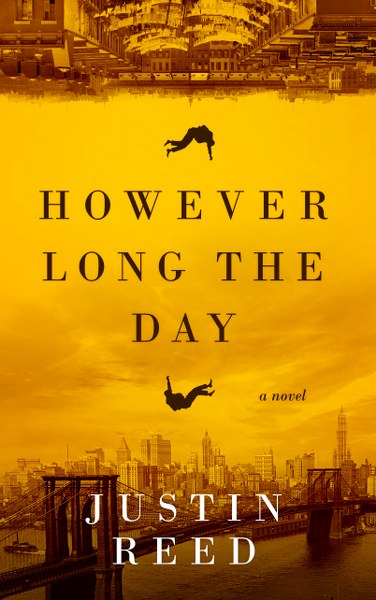
first title of However
Long the Day
was Working
Title.
An acquaintance saw the cover page of the manuscript and commented
how interesting the title was (their expression led me to believe
that by interesting
they meant completely
stupid)
and wondered aloud whether it was too literary. I assured this person
it was literal, not literary, and represented a placeholder. I then
walked into the other room and crossed that person’s name off my
beta reader list.
I
held onto Working
Title
for as long as I could, mainly because I wanted to avoid the mental
torture of selecting something better and the attendant risk of
settling on something far worse. Eventually, though, people outside
my own home needed to read the novel, and a placeholder was
insufficient.
Over
the course of a half a day at the office, I jotted down eighteen
options, mulled them over, and without asking for any other input,
slapped Crosswise
in Carnegie Hill
on my cover page and sent it to the printers. I should have known,
after I got home and told my daughter the news, that it wouldn’t
last. She gave me the same look my acquaintance had.
It
didn’t take long for the shine to wear off on Crosswise
in Carnegie Hill.
It sounded like an article in Highlights,
the magazine your kids read while they’re waiting in the dentist
office. But I stuck with it through the beta reading process, and
well into the second draft phase. I again waited until the very last
moment.
Luckily,
I decided to employ a more scientific approach during the second
attempt to name the story.
I
began by listing major categories that could influence the title of
the book: Theme, Plot/Setting, and Character. I came up with lists of
words in each of these categories, and for each of those words dug up
at least five synonyms.
I
then played mix-n-match with all of these words like a kid building
something with Legos. To my original list of eighteen I added another
one hundred fifteen alternatives, each crying out they could be a
contender. I didn’t include obviously bad combinations, but neither
was I too fussy about removing all the garbage (there were plenty
that were the book marketing equivalent of Fart
Flowers).
I
reviewed this list with my focus groups (wife and kids), and they
gave their opinions on everything. Some of the options were crossed
out multiple times, they were so bad. Some of the candidates were
really cool, but wrong for the book. In the end, the process yielded
a list of ten finalists I could stew on.
My
next job was to determine if these ten finalists were taken,
meaning another book, movie, and/or other media already existed with
that title or something similar. What followed was a wacky and
surprising journey through Amazon and other booklisting services. I
should have known that any title that included the word night
would likely be taken by a romance and/or erotica author or seven.
At
the end of this process of verifying and investigating, I was left
with an even smaller list: zero.
That’s
right, I was left with zero usable titles.
Bummer.
All
was not lost. My favorite of the ten finalists, However
Long the Night,
was derived from an Irish maxim that I had twisted to match the
setting of the book. The original saying is However
long the day, the evening will come.
Most of the book takes place at night, so I changed the candidate to
However
Long the Night.
Unfortunately (or maybe fortunately), that title was used by a book
published five years ago. Incidentally, However
Long the Night
comes from a similar adage, only of African origin.
In
the end, I untwisted the saying, and happily chose However
Long the Day.
I’m
pleased to have found something at all. The first novel I wrote,
which I set aside to write However
Long the Day,
suffered a worse fate. I sent it to some beta readers with a mediocre
title, and the smell of it added nothing to their reading
experience.
I
hope, for my sake, to someday have the experience other authors
report, of having a title presented to them from On High, or knowing
the title before the first word is written. Until then, I’ll fret
over finding titles that entice potential readers to stop and smell
the roses.
Follow
the tour HERE
for special content and a giveaway!
$20 Amazon